
Legacy article
3 Behavior-Smart Tactics to Help Destination Management Organizations Tackle Overtourism
Find 3 behavior-smart tactics that can help destinations influence the mindset and plans of future visitors and help them tackle overtourism.
- Author
- By Milena Nikolova
- Published
- July 26, 2024
This article was migrated from the BehaviorSMART archive with its original legacy context.
Tourism has nearly recovered to reach pre-pandemic numbers. But for residents in destinations around the world, this isn’t necessarily a cause for celebration.
From locals protesting in Mallorca and the Canary Islands to a growing number of restrictions in Venice, Paris, and Amsterdam; in 2024, tourists aren’t facing the welcome they were once offered.
Overtourism, the strain and disruption tourists inflict on destinations, has reached a boiling point.
While the result of many contributing factors, the frustration stems from the fact that one way or another, locals feel like their home – a village, town, or city – is being reduced to an amusement park for tourists. When you look at the visitor data, it’s not hard to see why — in cities across the world, tourists outnumber the locals: for every 1 inhabitant there are 36 tourists in Dubrovnik, 21 in Venice, Rhodes, and Bruges, and 16 in Reykjavik.
But as our Chief Behavior Officer Milena Nikolova wrote on the subject for the Adventure Travel Trade Association, overtourism isn’t just about the volume of tourists, but tourists’ behavior while they are at the destination. “A disparity between traveler behavior and local social norms can also be classified as overtourism… travelers might not overwhelm in volume, but they behave in disrespectful ways that irritate local residents, leaving behind a vibe that their presence as tourists has crossed a line,” she wrote.
But is there a way to influence traveler behavior and reduce the likelihood that visitors will act in ways that clash with local norms?
The short answer is yes.
While there’s no magic wand that will solve that at once and different stakeholders in the local ecosystem have a role to play, including destination authorities, there are few things they can change to start making a difference step-by-step.
The content that destinations use to trigger the interest of markets has the power to also activate greater empathy, responsibility, and respect for local customs. It can influence visitor perceptions and planning behavior in ways that generate social-economic benefits for residents and enhance the value and quality of the tourism experience.
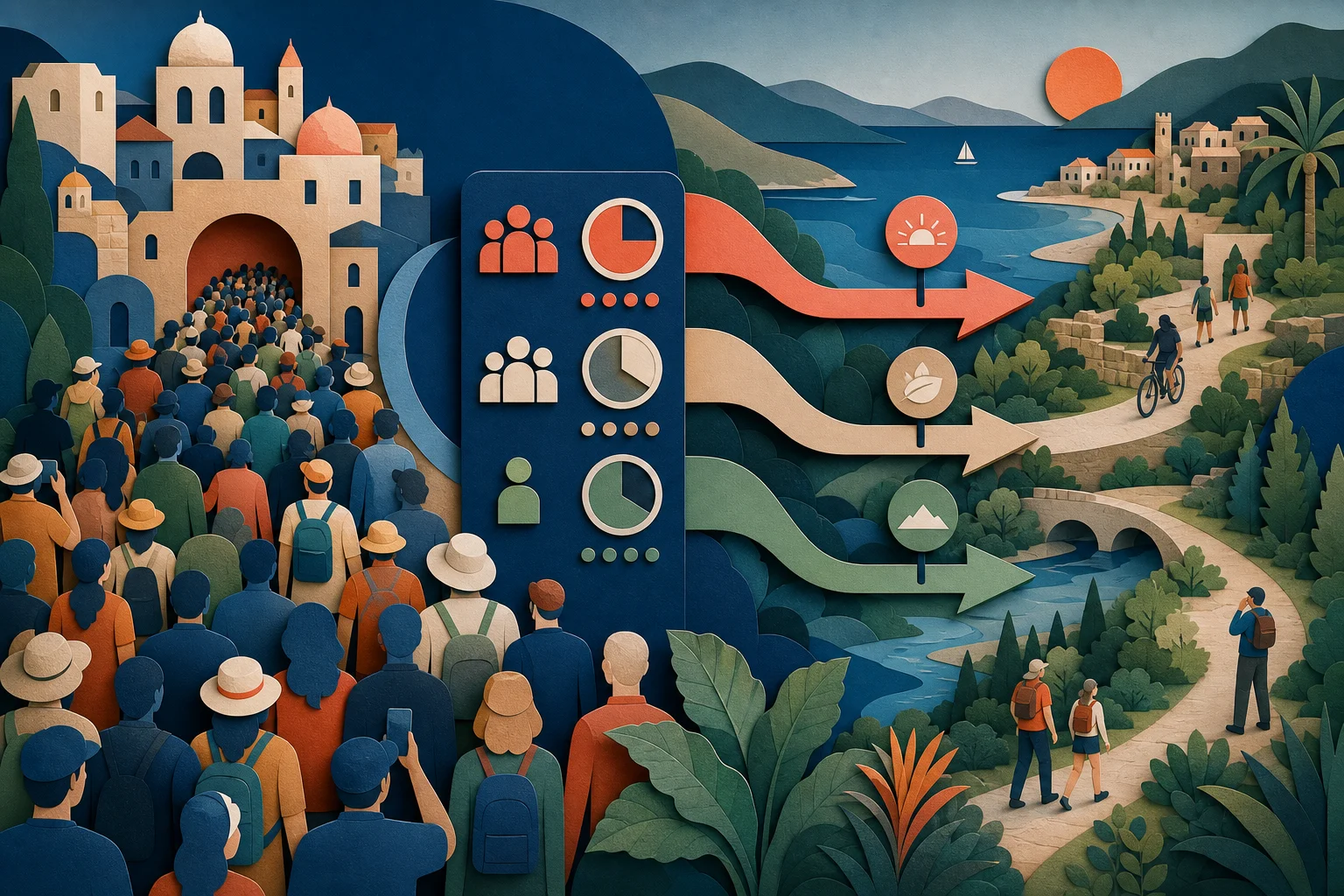
Here are 3 behavior-smart tactics that can help destinations influence the mindset and plans of future visitors to ensure that when they arrive they will be mindful and respectful during their stay.
3 Behavior-Smart Tactics to Help Destination Management Organisations Tackle Overtourism
1. Marketing and Communication
Effective marketing and communication strategy can shape tourists’ expectations and behavior even before they arrive at the destination. Destinations can use simple behavior-smart tactics to promote non-disruptive experiences and encourage tourists to imagine engaging in appealing off-the-beaten-path activities. By doing so, destinations can influence travel planning in advance for a more responsible and non-destructive experience for both visitors and locals.
For example, presenting attractions on the outskirts of the city in ways that activate the perception that they should not be missed can help reduce the strain on central areas. Such tactics encouraging a more balanced visitor spread really depend on how future visitors think they will make their experience more memorable. You can also grow interest in off-the-beaten-path spots and activities through smart storytelling or by creating more visual content around those attractions. Think of all the other ways your destination can shape tourists’ travel plans so that they don’t disrupt locals’ daily lives – accounting for the typical daily routine of working residents when planning how to spend the day, exploring the destination at a slower pace to enable more mindful engagement with people and local businesses, learning about local customs and norms to avoid unintentional acts of disrespect, etc.
Tourists might not immediately purchase a tour or attraction ticket, but with an effective marketing and communication strategy you’re planting a seed in their minds. Ultimately, when they visit that attraction/site during their stay, you’ve succeeded in nudging them toward a more sustainable experience.
2. Mobility and Transportation
Transportation systems play a crucial role in managing tourist flow and reducing pressure from tourism. You can mitigate overcrowding and pollution by encouraging the use of walkable routes, public transportation during non-peak hours, and bikes. Furthermore, implementing behavior-smart tactics, such as providing incentives for using low-footprint mobility options, can influence tourists’ travel choices, making them the obvious, easy choice that requires no second thought.
For example, Zion National Park in the U.S. bans personal vehicles during peak season and instead offers a free park-and-ride bus service. These regular shuttles, equipped with practical additions like bike racks, ensure that taking the bus is the easiest and most straightforward option for visiting the park. To enhance the experience, the shuttles also feature guided narration introducing visitors to the park’s history, wildlife, and geology. Introducing free transportation to less visited spots in the destination and combining that with other perks increases the appeal of these attractions while reducing congestion, educating tourists, and enhancing their overall experience. It’s a win-win for everybody.
Smart promotional content can prime visitors to imagine themselves exploring by foot or public transportation. Targeted and timely information about the local transportation system, ticketing, and schedules provided by the destination can make it super easy for guests to act on the intention once they arrive. By making walking or the use of public transport a likely choice, destinations can alleviate the strain on local infrastructure and contribute to a more sustainable tourism model. Encouraging tourists to use public transport during off-peak hours can also help balance the load on transportation systems, ensuring that locals are not inconvenienced during their daily commutes.
3. Economic Value: Supporting Local Businesses
Encouraging tourists to support local businesses ensures that the economic benefits of tourism are felt more broadly within the host community. Your destination can promote local guides, authentic experiences, locally-owned restaurants, boutiques, and accommodations through engaging storytelling and attractive visuals, highlighting their unique offerings. Focusing visitor’s attention on the benefits and special value of local offerings fuels the likelihood that guests will pursue them because they will enhance their travel experience. By influencing tourists to choose these options, you not only enhance their satisfaction but also ensure that their spending benefits directly more residents, fostering more support for the tourism economy.
These are just a few examples of how targeted and well-timed tactics can influence visitor behavior in ways that enhance the visitor experience and ensure harmony with local community dynamics. Through behavior-smart tactics, destinations can effectively guide tourists towards choices that are beneficial for both the visitors and the local residents, ensuring a balanced and respectful coexistence.
Introducing beSMART Platform, BehaviorSMART’s Solution to Overtourism
To tackle the challenges of overtourism effectively, destinations need actionable solutions that integrate seamlessly into their operations and that influence visitors at different choice points. This is where the beSMART Platform comes in. Grounded in behavioral economics, beSMART provides Destination Management Organizations (DMOs) with the means to transform micro tactics into macro impacts. Our innovative platform guides destination professionals through actionable steps to achieve sustainability goals by influencing travelers to make choices that benefit the environment, local communities, and the local economy.
Furthermore, beSMART serves as a dedicated companion to both sustainability and marketing teams, helping them implement sustainability practices in harmony with effective marketing tactics and priming visitors to behave in ways that reduce the risk of overtourism.
Interested in learning more about the beSMART Platform?
The platform is currently available to select launch partners, with general availability expected later this year. Request early platform access here.